
Rule of thumb: if your garage door is slow, noisy, or stuck in the morning but fine by afternoon, the cold (or the moisture that comes with it) is almost always the cause, not a broken part. The exceptions are a door that stays sluggish all day regardless of temperature, one that reverses or won't close at all, or one that's been getting gradually worse for weeks — those point to a mechanical problem that cold weather is only exposing.
Symptoms to Notice
- The door hesitates or groans for the first few inches of travel, then runs normally.
- The bottom seal seems glued to the slab and resists lifting, especially after a cold, damp night.
- The opener motor sounds like it's working harder than usual, or the door reverses partway up.
- Rollers squeak or chatter in the track on cold mornings but quiet down once you've run the door a few times.
- Cables or hinges near the coast show a fine white or orange film and feel stiffer than they did in summer.
San Diego doesn't get hard freezes, but inland pockets around Poway and El Cajon can dip into the 30s and 40s on clear winter nights, and coastal fog and dew add moisture everywhere from La Jolla to Chula Vista. That combination — cold metal, damp rubber, and dust left over from the dry season packed into tracks — is what actually causes most of this, not ice.
What a Technician Checks First: The Bottom Seal
The vinyl weatherstripping along the bottom of the door is the first thing to inspect because it's the most common culprit. Overnight moisture can let the rubber bond lightly to a cold concrete slab, which feels exactly like the door is stuck when it's really just the seal holding on.
- The fix: never force the opener or pry the door with a bar. Pour a little warm (not hot) water along the seal line to break the bond, then run the door manually. If the seal is cracked, flattened, or torn, it should be replaced — a fresh bottom seal is inexpensive and restores both the fit and the weather protection going into the rainy season.
Next: Tracks, Rollers, and Hinges
If the seal isn't the issue, the next stop is the moving hardware. Old grease thickens in cooler temperatures, and dust from dry-season Santa Ana winds mixes into it to form a gritty paste inside the tracks and on the roller stems.
- The fix: wipe the tracks clean with a dry cloth, then apply a garage-door-specific lithium or silicone-based lubricant to the rollers, hinges, and the spring coils — never WD-40, which is a solvent and actually strips lubrication over time. Worn nylon rollers that are cracked or flat-sided should be swapped out rather than just lubricated.
Then: Spring Tension
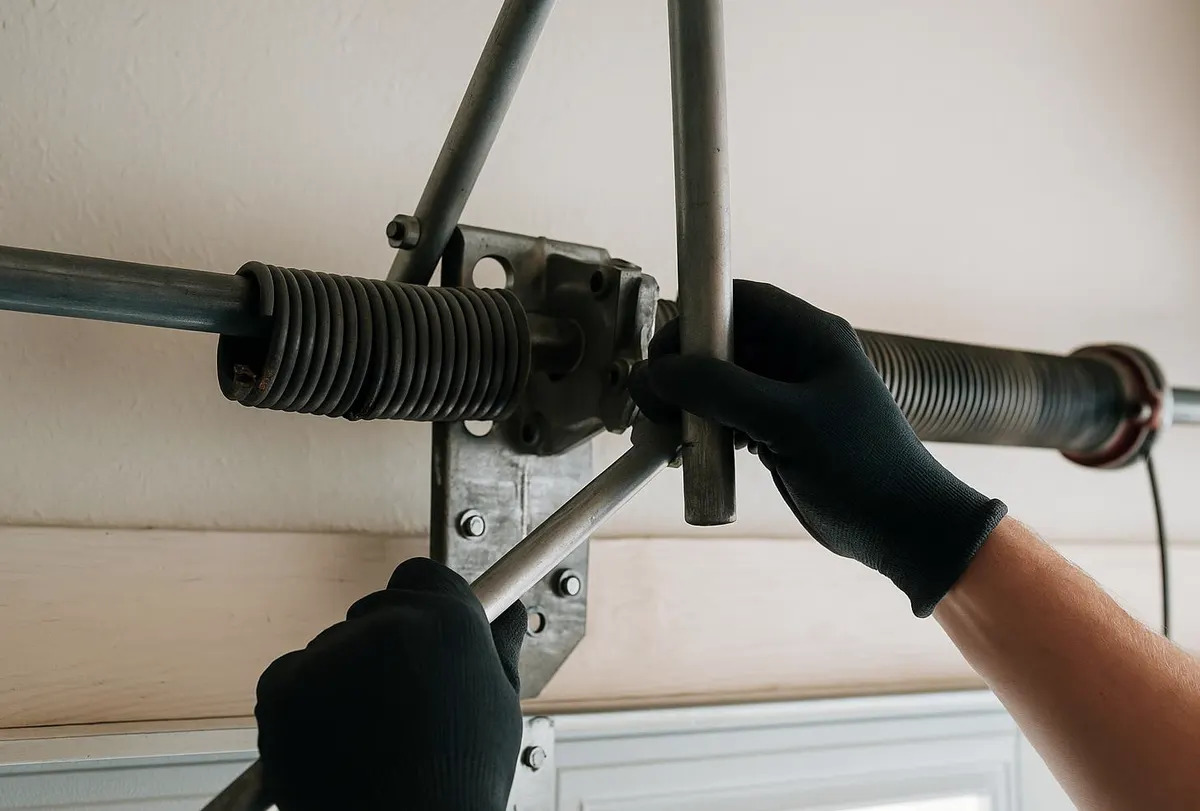
Torsion and extension springs are steel, and steel contracts slightly as it cools, which can make a door feel heavier or slower to lift on cold mornings even when nothing is actually broken. If the opener strains every single time, not just on cold days, the spring may be under-tensioned or near the end of its lifespan.
- The fix: a technician checks the door's balance by disconnecting the opener and lifting it by hand — it should stay roughly in place at waist height. If it doesn't, the spring needs adjustment or replacement. This isn't a DIY repair; torsion springs are under heavy tension and require the right tools and experience.
After That: Cables and Pulleys
On homes closer to the coast — La Jolla, parts of Clairemont — salt air accelerates corrosion on cables, pulleys, and exposed hardware. Corrosion adds friction, which shows up as the same sluggish, groaning behavior as cold weather but doesn't improve once the day warms up.
- The fix: inspect cables for fraying or rust and replace them if compromised, and clean or replace pulleys that are binding. This is usually bundled with spring work since the system is already under tension at that point.
Last: The Opener Itself
If everything mechanical checks out, the opener's force and limit settings get tested. A door that's slightly heavier from cold or corrosion can trip the opener's safety sensors, causing it to reverse or stop short — the opener isn't broken, it's doing its job, but the settings may need recalibrating once the underlying resistance is fixed.
When to Call San Diego Garage Door
If your door is sticking most mornings, if the opener sounds strained even in the afternoon, or if you notice visible wear on cables or springs, it's time to call. We handle this with our Garage Door Maintenance service, which covers lubrication, track alignment, and balance checks in one visit, and our Spring Replacement service when tension is the real issue. Catching it now, before the winter rains add more moisture to the mix, is cheaper than an emergency call later.
If your garage door has been sluggish, noisy, or stuck lately, give San Diego Garage Door a call. We serve homes and businesses throughout San Diego, CA, and can usually get a technician out fast to get your door moving smoothly again before the wet season settles in.